Choosing a tennis racquet is easier when you focus on comfort, forgiveness, and learning instead of copying what advanced players use. For most beginners buying a first adult racquet, the main specs to check are head size, weight, balance, string pattern, grip size, strings, and tension.
💡 Quick Answer
For most beginners, a good tennis racquet usually has:
- Head size: 100-105 sq in
- Weight: 270-290g unstrung
- String pattern: 16x19
- Strings: multifilament or synthetic gut
- Tension: mid-to-high 40s lbs for more comfort
- Grip: choose based on hand size; when unsure, slightly smaller plus an overgrip is easier to adjust than too large
- Balance: even or slightly head light
Beginners should usually avoid very heavy racquets, very stiff frames, and tight polyester strings until their technique improves.
Want help finding a beginner-friendly racquet deal?
I look for racquet deals that match beginner-friendly specs: 100–105 sq in head size, 270–290g unstrung weight, comfortable strings, and reasonable pricing.
🤔 Why I Started Paying Attention to Tennis Racquet Specs
I started learning tennis because of my daughter. When she began taking lessons around age 9, I started hitting with her so she could practice more outside of lessons.
At first, I thought a racquet was just a racquet. But as I practiced more, especially serving and hitting forehands, I started realizing that racquet weight, strings, tension, and grip comfort actually matter.
I also learned this the hard way through elbow discomfort. Using stiff strings, gripping too tightly, and relying too much on my arm made me pay more attention to racquet setup. This is not medical advice, but it changed how I think about beginner racquet choices.
🔍 Explore the Parts of a Tennis Racquet
In order to learn the different specs easily, I made an interactive racquet guide below. Here I use Yonex eZone 100 as an example, but the specs are generic to any normal tennis racquet. If you want product-specific examples after learning the basics, the Tennis Racquet Specs Explorer has shareable pages for individual frames.
Hover or tap each part of the racquet to learn what it does and how it affects your game.
Interactive tennis racket anatomy guide
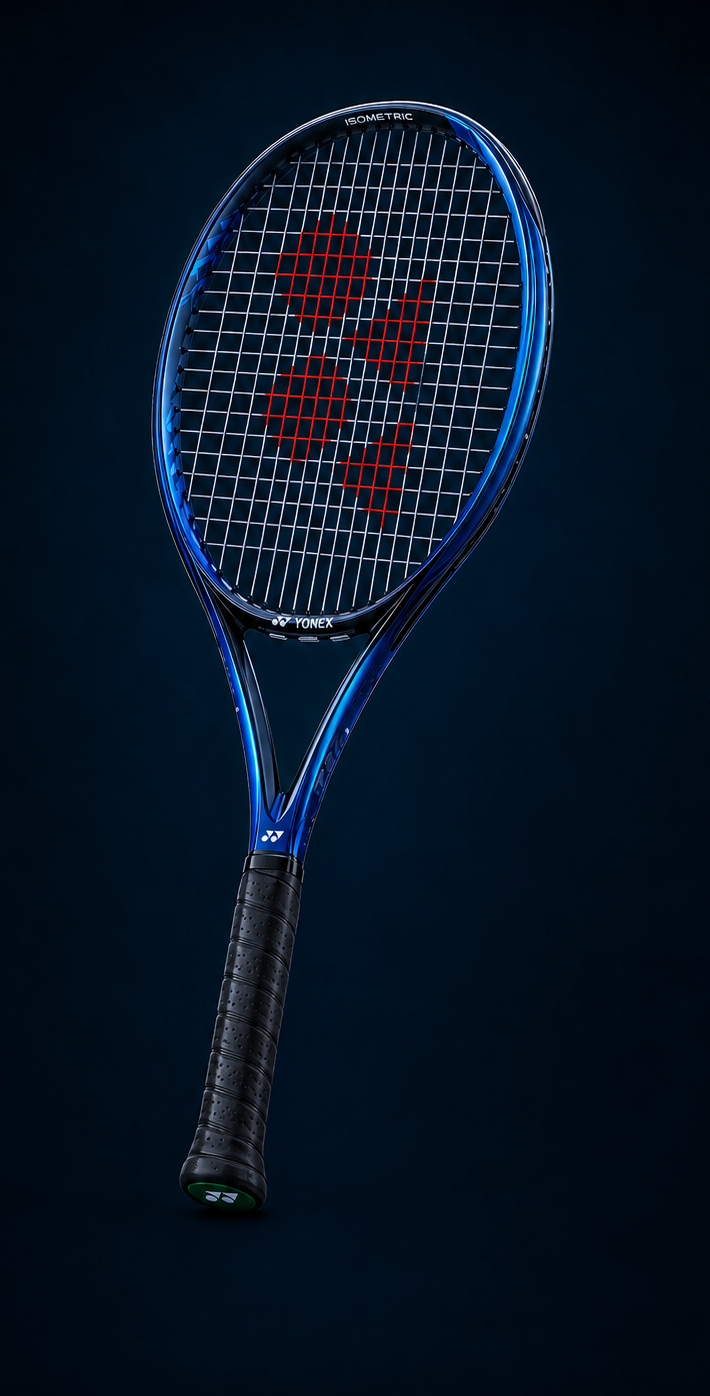
Tennis Racquet Anatomy: What Each Part Means
-
Head: The head size affects forgiveness and sweet spot size. Beginners usually do well with 100–105 sq in.
-
Strings: Strings affect comfort, power, spin, and feel. Beginners should usually start with multifilament or synthetic gut.
-
Sweet Spot: The sweet spot is the most forgiving contact area. A larger head size usually gives beginners a larger effective sweet spot.
-
Frame / Beam: The frame affects stiffness, stability, and power. Very stiff frames may feel powerful but can be less comfortable.
-
Throat: The throat connects the head to the handle and affects the racquet’s feel and stability.
-
Grip: Grip size affects comfort and forearm tension. A grip that makes you squeeze too hard can contribute to arm discomfort.
-
Butt Cap: The butt cap helps keep the racquet stable in your hand and marks the end of the handle.
-
Balance Point: Balance affects maneuverability and power. Beginners usually do well with even or slightly head-light balance.
📊 Beginner Tennis Racquet Specs at a Glance
This table is the simplest starting point if you just want beginner-friendly racquet specs.
| Spec | Beginner Recommendation | Why It Matters |
|---|---|---|
| Head Size | 100-105 sq in | Larger sweet spot and more forgiveness |
| Weight | 270-290g unstrung | Easier to swing and learn technique |
| String Pattern | 16x19 | Easier spin and power |
| Strings | Multifilament or synthetic gut | More arm-friendly and comfortable |
| Tension | Mid-to-high 40s lbs | More comfort and less shock |
| Grip Size | Comfortable without squeezing | Helps avoid excessive forearm tension |
| Balance | Even or slightly head light | Easier maneuverability |
Get tennis deals in your inbox
I use Tennis Deals to avoid checking multiple stores manually. Subscribe for racquet, shoe, string, ball, and gear deal alerts by email.
🎾 Head Size: How Big Should a Beginner Tennis Racquet Be?
Head size affects forgiveness and the size of the sweet spot.
For most beginners, I would look for a racquet around 100-105 sq in. A larger head size gives more room for error, which is helpful when you are still learning timing and contact point.
Beginner recommendation
Most beginners should start around 100-105 sq in.
Common mistake
A common mistake is choosing a small player racquet too early, such as a 95-98 sq in frame, just because advanced players use it. I am using a 98 sq frame racquet now but it took me quite some time to get used to it when I just switched from a 100 sq.
My practical note
When you are still learning, a little forgiveness can make practice more productive. You still need good technique, but a beginner-friendly head size gives you more playable contact when your timing is not perfect.
⚖️ Weight: What Tennis Racquet Weight Is Good for Beginners?
Racquet weight affects swing speed, stability, comfort, and fatigue.
For most beginners, a racquet around 270-290g unstrung is a good starting range. It is usually light enough to swing comfortably but still stable enough for learning proper strokes.
Beginner recommendation
Start around 270-290g unstrung.
Common mistake
Many beginners choose a heavy racquet too early because they see advanced players using heavier frames. A heavier racquet can feel stable. I also find it easier to serve at the beginning with a heavier frame. However, it can also make technique harder to learn and may increase arm fatigue, and even cause elbow issues.
My practical note
For a beginner, the best weight is not the heaviest racquet you can hold. It is the weight you can swing repeatedly while staying relaxed and learning clean mechanics.
🧵 String Pattern: Is 16x19 Good for Beginners?
String pattern affects spin, power, control, and feel.
A common beginner-friendly string pattern is 16x19. It usually gives easier access to spin and power compared with denser patterns like 18x20.
Beginner recommendation
Most beginners do well with a 16x19 string pattern.
Common mistake
Beginners often overthink string pattern before they have consistent technique. It matters, but not as much as weight, head size, strings, and comfort.
My practical note
I would not make string pattern the first filter when choosing a beginner racquet. I would first make sure the racquet weight, head size, grip, and strings are comfortable.
✋ Grip Size: Choose Comfort Over Squeezing
Grip size affects comfort and how relaxed your hand and forearm can stay.
If the grip feels too small or too large, you may squeeze harder without realizing it. From my own experience, gripping too tightly was one of the things that contributed to elbow and forearm discomfort.
Beginner recommendation
Choose a grip size that feels comfortable and lets you hold the racquet without squeezing too hard.
Common mistake
Do not choose a grip that makes you constantly tense your hand or forearm.
My practical note
If arm comfort is already on your mind, grip tension is worth paying attention to. I wrote more about my experience here: Tennis Elbow and Golfer's Elbow: What Helped Me Recover.
🧵 Strings and Tension: Don't Ignore Arm Comfort
Strings can make a big difference in comfort.
I learned this after dealing with tennis elbow and golfer's elbow symptoms. I used to play with polyester strings around 50 lbs. Later, I switched to softer multifilament strings around 48 lbs, and it felt much easier on my arm.
Beginner recommendation
For most beginners, I would start with:
- multifilament or synthetic gut strings
- mid-to-high 40s lbs tension
- avoiding stiff polyester strings at high tension early on
My experience
The most comfortable string I tried was Tecnifibre X-One Biphase at 48 lbs. I also tried Wilson NXT and Head Velocity MLT. X-One felt the best to me, though it is more expensive.
If you are watching current prices, check tennis string deals for softer string options and current string discounts.
Common mistake
A lot of beginners copy advanced setups too early, especially polyester strings at higher tension. That may give more control, but it can be harsh on the arm.
⚖️ Balance: Head Light, Even Balance, or Head Heavy?
Balance describes where the weight is distributed in the racquet.
A head-light racquet feels easier to maneuver. A head-heavy racquet can provide more power, but it may also feel harder to control for beginners.
Beginner recommendation
For most beginners, I would choose even balance or slightly head light.
Common mistake
Choosing something too head-heavy can make the racquet feel powerful at first, but it may become harder to control and tiring during longer sessions.
My practical note
If you are learning forehands, volleys, and serves, maneuverability matters. A racquet that feels easy to move can help you focus on timing and contact instead of fighting the frame.
👍 What I Would Choose for a Beginner
If I were choosing a first racquet for a beginner today, I would look for:
- 100-105 sq in head size
- 270-290g unstrung weight
- 16x19 string pattern
- comfortable grip size
- multifilament or synthetic gut strings
- moderate tension around the mid-to-high 40s lbs
The goal is not to buy the most advanced racquet. The goal is to choose something comfortable enough to help you learn.
Next Step: Check Current Tennis Racquet Deals
Once you know the beginner-friendly specs to look for, you can compare current racquet discounts here:
Check Today’s Tennis Racquet Deals
When comparing deals, I would still prioritize comfort, head size, weight, and string setup over simply buying the cheapest racquet.
❌ Common Mistakes When Choosing a Tennis Racquet
Choosing a racquet that is too heavy
A heavy racquet may feel stable or powerful, but it can make learning harder if your swing mechanics are not ready.
Choosing stiff polyester strings too early
Poly strings can be useful for advanced players to generate top spins, but they are not always the best starting point for comfort.
Ignoring grip comfort
If you constantly squeeze the racquet, your forearm and elbow may take more stress.
Copying a pro player's racquet
Professional players use racquets customized for their game. Beginners should choose based on comfort, control, and learning.
🔗 Related TennisHub Resources
- Today's Best Tennis Deals
- Tennis Racquet Specs Explorer
- Best Beginner Tennis Racquets: Popular Models + Specs
- Tennis Racquet Deals
- Tennis String Deals
- Tennis Elbow and Golfer's Elbow: What Helped Me Recover
- Best YouTube Channels for Learning Tennis
- Tennis Learning Resources
❓ FAQ
What is the best tennis racquet size for beginners?
Most beginners should look for a racquet with a head size around 100-105 sq in because it provides more forgiveness and a larger sweet spot.
Is a lighter tennis racquet better for beginners?
Usually yes. A racquet around 270-290g unstrung is easier to swing and helps beginners learn technique without getting tired too quickly. I even started with a junior full racquet size at the beginning.
Should beginners use polyester strings?
Most beginners should avoid stiff polyester strings at high tension. Multifilament or synthetic gut strings are usually more comfortable. Polyester strings get dead sooner. If you don't restring it hurts your arms easily and cause fatigue or even elbow injuries.
What string tension is good for beginners?
A mid-to-high 40s lbs tension is a comfortable starting point for many beginners, especially if arm comfort is important. A lower tension can also help generate more power for beginners, even though you tradeoff control for it.
Can the wrong racquet cause tennis elbow?
A racquet setup that is too heavy, too stiff, or strung too tightly may contribute to arm discomfort, especially when combined with poor technique or gripping too hard.